
Predictive Analytics is at the heart of today’s digital economy, often compared to the “new oil.” Yet, raw data by itself holds little value unless it is refined, processed, and turned into meaningful insights. This is exactly where predictive analytics makes the difference, transforming information into actionable strategies.
By leveraging historical data, advanced statistical models, machine learning, and AI, predictive analytics allows organizations to forecast future outcomes, anticipate challenges, and make proactive decisions. Instead of just explaining what happened in the past, predictive analytics empowers businesses to understand what is likely to happen next — and how to prepare for it.
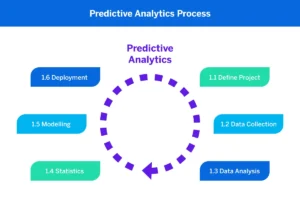
What Is Predictive Analytics?
Predictive analytics is the practice of using data, algorithms, and machine learning techniques to identify patterns and forecast future outcomes. Unlike traditional analytics, which often stops at explaining what has already happened, predictive analytics goes a step further by attempting to determine what is likely to occur next. This forward-looking approach has become a game-changer for organizations, businesses, and even governments, helping them make smarter decisions based on evidence rather than guesswork.
At its core, predictive analytics combines three key elements: historical data, statistical algorithms, and machine learning models. Historical data acts as the foundation, offering a record of past events and behaviors. Algorithms then process this data to uncover hidden patterns and correlations that may not be visible through simple observation. Machine learning further enhances this process by continuously improving predictions as more data becomes available, making the system smarter over time.
One of the most valuable aspects of predictive analytics is its versatility across industries. In healthcare, for example, predictive models are used to anticipate patient outcomes, identify potential disease outbreaks, and reduce hospital readmission rates. Retail businesses rely on it to forecast consumer demand, personalize product recommendations, and optimize inventory management. In finance, predictive analytics plays a crucial role in detecting fraudulent transactions and assessing credit risks. Even sectors like sports and entertainment use these techniques to analyze performance, improve audience engagement, and increase revenue.
The benefits extend beyond industry applications. On an operational level, predictive analytics allows organizations to reduce costs, increase efficiency, and allocate resources more effectively. By anticipating future challenges or opportunities, businesses can act proactively rather than reactively. For instance, a manufacturing company might use predictive models to foresee equipment failures, allowing them to schedule maintenance before a costly breakdown occurs. Similarly, a transportation service can predict traffic congestion and reroute vehicles to save time and fuel.
Another significant strength of predictive analytics is its ability to support personalization. Modern consumers expect brands to understand their needs and deliver tailored experiences. Predictive models enable companies to anticipate customer behavior, from what products they might buy to when they are most likely to engage. This not only enhances customer satisfaction but also builds stronger brand loyalty.
However, predictive analytics is not without challenges. Data quality and availability remain major concerns, as inaccurate or incomplete data can lead to flawed predictions. Additionally, ethical considerations around privacy and bias must be carefully addressed. If models are trained on biased data, they can reinforce existing inequalities. Organizations must therefore implement strong governance frameworks and adopt responsible practices to ensure predictions are both accurate and fair.
Looking ahead, predictive analytics will continue to evolve as technology advances. The integration of artificial intelligence, real-time data processing, and the Internet of Things (IoT) will make predictions even more precise and actionable. Companies that embrace these innovations will be better positioned to navigate uncertainty and stay ahead of competition.
In conclusion, predictive analytics is far more than a buzzword—it is a powerful tool that transforms raw data into meaningful insights about the future. By blending historical knowledge with modern computational power, it empowers individuals and organizations to make informed decisions, anticipate challenges, and seize opportunities with confidence. As the digital world grows more complex, the ability to predict what lies ahead will remain one of the most valuable assets for success.
trends or behaviors.
Unlike descriptive analytics, which looks backward at past events, predictive analytics is forward-looking. It helps organizations anticipate scenarios, mitigate risks, and uncover opportunities before they arise.
Examples include:
-
Anticipating customer churn in subscription-based businesses
-
Forecasting demand in retail and e-commerce
-
Detecting fraudulent transactions in finance
-
Predicting equipment breakdowns in manufacturing
-
Estimating patient admission rates in healthcare
Why Predictive Analytics Matters
Predictive analytics is not just about numbers — it’s about turning data into actionable business strategies. Here’s why it’s so important:
Proactive Decision-Making –
Businesses can anticipate problems and act before they escalate.
Increased Efficiency –
Resources are optimized, operations streamlined, and costs reduced.
Competitive Advantage –
Companies that predict trends can innovate faster and stay ahead of competitors.
Personalized Experiences –
Tailored recommendations enhance customer satisfaction and loyalty.
Key Applications of Predictive Analytics
1. Marketing & Customer Insights
Brands use predictive analytics to segment audiences, forecast buying behavior, and create personalized campaigns. This results in higher conversions and stronger brand-consumer relationships.
2. Healthcare
Hospitals leverage predictive models to anticipate patient admissions, track disease outbreaks, and evaluate treatment effectiveness. This improves both patient care and resource allocation.
3. Finance
Banks and financial institutions rely on predictive analytics to detect fraud, assess credit risk, and predict loan defaults. This strengthens security and reduces losses.
4. Retail & E-commerce
Retailers forecast product demand, optimize pricing, and reduce inventory waste by anticipating customer needs. Personalized shopping recommendations are also powered by predictive models.
5. Manufacturing & Supply Chain
Predictive analytics enables companies to anticipate machine failures, optimize logistics, and minimize downtime — saving both time and money.
Tools and Technologies Behind Predictive Analytics
it is closely tied to advancements in technology. Key enablers include:
-
Machine Learning Algorithms –
-
Uncover hidden patterns in massive datasets and generate accurate predictions.
-
Big Data Platforms –
-
Tools like Hadoop and Spark handle enormous volumes of structured and unstructured data.
-
AI-Powered Analytics Solutions –
-
Platforms such as IBM Watson, SAS, and Microsoft Azure deliver predictive insights at scale.
Predictive vs. Prescriptive Analytics
While predictive analytics forecasts what is likely to happen, prescriptive analytics goes one step further by recommending what should be done.
For example:
-
Predictive:
-
A model forecasts a high risk of customer churn.
-
Prescriptive:
-
The system suggests offering loyalty rewards or personalized discounts to retain that customer.
This evolution from predictive to prescriptive analytics represents the next frontier in data-driven decision-making.
Real-World Examples of Predictive Analytics in Action
-
Netflix & Amazon –
-
Personalized recommendations based on viewing or shopping history.
-
Airlines –
-
Predicting flight delays using weather and historical travel data.
-
Banks –
-
Real-time fraud detection by flagging unusual transactions.
-
Healthcare Providers –
-
Predicting patient readmission risks and adjusting treatment plans accordingly.
Challenges in Predictive Analytics
Despite its benefits, predictive analytics is not without challenges:
-
Data Quality Issues –
-
Poor or incomplete data can lead to inaccurate predictions.
-
Integration Difficulties –
-
Combining predictive models with existing systems can be complex.
-
Ethical Concerns –
-
Misuse of personal data can raise privacy issues.
-
Skill Gaps –
-
Organizations often lack trained data scientists and analysts.
Overcoming these barriers requires strong data governance, investment in modern tools, and a culture that values data-driven decision-making.
The Future of Predictive AnalytAics
As AI and machine learning continue to advance it will become even more accurate and widely adopted. Businesses will move from:
-
Descriptive analytics
-
(what happened) →
-
Predictive analytics
-
(what will happen) →
-
Prescriptive analytics
-
(what should we do).
In the coming years, predictive analytics will be embedded into everyday business processes, from marketing campaigns and financial planning to healthcare treatments and smart manufacturing systems.
Key Takeaway
Predictive analytics is powerful because it transforms raw data into actionable insights. For businesses, this means moving from reactive decision-making to proactive strategy.
From boosting efficiency and improving customer experiences to gaining a competitive edge, it is no longer optional — it’s a necessity for thriving in today’s data-driven world. Companies that embrace it won’t just understand the past; they’ll actively shape the future.